Book a Cab
Using a Hands Free Voice Assistant
Concept
Brief
GoVox, voice-powered 3rd party ride-hailing assistant
Enables users to book, modify, and track cabs hands-free, improving accessibility, safety, and convenience. With the rise of voice-first experiences, users seek seamless hands-free interactions across multiple applications. Instead of relying on a single cab booking app, we designed a third-party voice assistant that integrates with multiple ride-hailing services (e.g., Uber, Ola, Rapidor) installed on the user’s smartphone.
Problem
Existing transportation solutions like Ola, Uber & Rapido require manual input through their apps, making it difficult for users in situations where they cannot use their hands or visually engage with their phones.
While voice assistants like Google Assistant & Siri offer basic booking functionalities, they are often limited to one app at a time & requires users to book manually, lack real-time fare comparison, & do not provide a seamless cross-platform experience. Users still need to manually switch between apps to compare fares or availability. Visually impaired users or those with mobility challenges face difficulties in navigating cab-booking apps.
Goal
To develop a universal voice assistant that accesses multiple installed cab apps, compares options, & enables hands-free booking using natural speech interaction.
The goal is to create an intelligent voice-driven system that can detect which cab apps are available, compare options, and book the most suitable ride based on user preferences—all through natural voice commands. This assistant enables users to book, modify, and track rides without manually navigating different apps. Ensure compliance with WCAG 2.1 accessibility standards to accommodate visually impaired users.
Duration
21 Weeks
Industry
Mobility & Transportation Tech, Conversational AI & Voice Technology. Primarily a in B2C but can be implemented as well.
Case Study
20
User Interviews
3
Main Personas
6
Unique Features
Research
Identify & understand user pain points, accuracy concerns, accessibility gaps as the goal is to prioritise users with varying abilities.
User research was conducted to ensure that the voice assistant for multi-app cab booking addresses real user needs, pain points, and preferences. Since this is a third-party voice assistant interacting with multiple ride-hailing apps (like Ola, Uber, and Rapido), understanding diverse user behaviors was critical to designing an intuitive and efficient solution.
Quantitative Analysis & its objective
Lets see the number’s & data to understand user preferences for cab booking methods. Assess the demand for hands-free cab booking. Understand user interest in comparing fares and ETAs across multiple apps.
Survey Questions
Below Survey questions were asked to users frequently commuting in Tier 1 & Tier 2 cities, often using Ola, Uber, Rapido
How often do you book cabs using mobile apps?
72% - At least 3–4 times per week
Have you ever tried using voice assistants for cab booking?
20% - Yes, but limited to Uber/Ola
Do you compare fares across apps ?
88% - Yes, to find the cheapest and fastest option
Are you satisfied with the accuracy of voice assistants in understanding Indian accents?
62% - Not accurate, frequent errors in understanding the accent
Would you prefer an app that integrates multiple cab apps and books hands-free while multitasking?
85% - Very interested
Questions Asked
Result & Answers
Qualitative Analysis, its objective & research methods
To identify real-world behaviour, needs, pain points, and expectations of users, particularly visually impaired users and commuters in India, when booking a cab using voice commands to ensure the solution is practical and accessible. Understand how users with varying abilities struggle with cab booking.
Research
Contextual Inquiry
Observed participants using comparing cab apps to book a cab in real-life situations.
Focused on noisy environments like bus stops and marketplaces while using voice ui for booking cabs.
In-Depth Interviews with visually impaired users
Focussed on participants who are visually impaired and their interaction with voice commands and feedback mechanisms.
Recognising the challenges with security & trust while they would board a cab.
Interviews with young parents & senior citizens
Explored challenges, trust issues, & emotional responses to voice interfaces. While showing preferences to natural language over structured commands.
Insights
Noting down the key insights after quality analysis to uncover user behaviours & patterns
Below are the points with explaining key user preferences and frustrations.
85% of participants preferred using voice commands for cab booking due to convenience but expressed low confidence in noisy environments.
Users wanted clarification prompts after providing key information.
Users found ride modifications (changing destination, adding a stop) complex and error-prone via voice.
90% of visually impaired participants highlighted the challenge of verifying the correct cab and driver upon arrival.
Visually impaired users relied extensively on voice prompts but found confirmation processes unclear in crowded or noisy spaces.
Visually impaired users preferred two-way OTP verification as an added layer of safety.
Persona’s
Below are 3 key persona’s - fictional, semi-realistic representation of a target audience based on research & data with demographics, behaviours, pain points & needs
1.The Parent on the Go
Name: Sudha Hari
Age: 30
Location: Madurai, India
Occupation: Homemaker & mother of two kids
Tech Proficiency: Medium
Ride-Hailing Usage: 5 times per week
Voice Assistant Experience: Uses Alexa for home automation.
Pain Points:
Finds app-based cab booking inconvenient while holding bags or managing kids.
Needs a reliable assistant that doesn’t misunderstand commands.
Voice UI Needs:
Simple, error-free interaction (e.g., “Get me a cab to my kid’s school.”).
Voice-based ride tracking: “Where’s my driver?”
Ability to send quick messages to the driver hands-free.
2.The Visually Impaired User
Name: Akash Verma
Age: 36
Location: Bangalore, India
Occupation: Freelancer & a Public Speaker
Tech Proficiency: High
Ride-Hailing Usage: 3-4 times per week
Voice Assistant Experience: Heavily relies on Google Assistant & screen readers.
Pain Points:
Many ride-hailing apps require visual confirmation, making booking difficult.
Struggles with unclear driver arrival updates.
Voice UI Needs:
Full voice-driven experience (no touch required).
Audio-based driver updates (e.g., “Your driver, Ankit, is 3 minutes away in a white Hyundai.”).
Ability to send quick messages to the driver hands-free.
Clear voice-based confirmations required.
3.The Busy Professional
Name: Mahathi
Age: 24
Location: Chennai, India
Occupation: Working professional at a MNC
Tech Proficiency: High
Ride-Hailing Usage: 5 times per week
Voice Assistant Experience: Uses Siri for reminders but finds voice booking unreliable.
Pain Points:
Too many app taps while multitasking (e.g., checking emails or making calls).
Needs quick cost estimation without navigating multiple apps back & forth.
Voice UI Needs:
One-command ride booking: “Book a cab to my office.”
Quick price & ETA updates.


User Flow
User flows help visualise the user's journey through a product, from an entry point to a successful outcome leading to a smoother & intuitive experience
Request cab booking via voice
Give destination & pick up confirmation
Book Cab via preferred app
Recieve & verify voice OTP
Get Pre- Ride Assistance
(identify Cab location)
Confirm driver via OTP/voice
Start the Ride
Successful/Ride Completed
Fare & ETA Confirmation
Authenticates via voice/ face ID
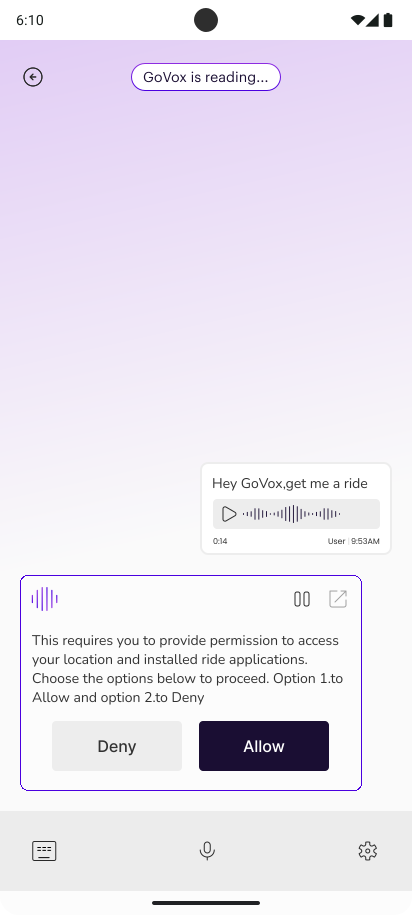
Give permissions access
Error Handling/ Repeat Command
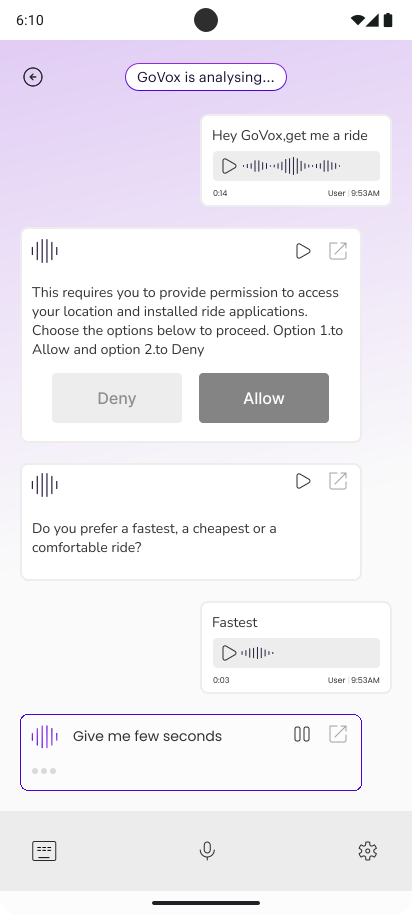
Select ride options & select service
Cancel Ride
Wake Word & invocation of App
SWOT
Analysis
A SWOT analysis is a framework for analysing both internal (strengths and weaknesses) and external (opportunities and threats) factors that can impact our success.
Threats (External, Negative)
Ride-Hailing Apps May Block Access – Ola/Uber may restrict API access if they view this as competition.
Privacy & Data Security Concerns – Users may worry about sharing ride details & payment info with a third-party assistant.
Competition from Google & Apple – Future updates to Google Assistant & Siri could make them better at cab bookings.
Market Adoption Challenges – Indian users may take time to trust a third-party voice assistant for ride booking.
Opportunities (External, Positive)
Growing Adoption of Voice AI in India – Increasing smartphone & voice assistant usage (Alexa, Google Assistant, etc.).
High Demand for Accessibility Solutions – Could be a game-changer for visually impaired & mobility-challenged users.
B2B Expansion Possibility – Could be offered as an API /SDK( Software development Kit) for integration into existing ride-hailing apps.
Partnerships with Automakers & IoT Devices – Can integrate with in-car assistants and smart home devices.
Weakness (Internal, Negative)
Dependency on Third-Party APIs – Relies on Ola, Uber, Rapido API integrations, which may have restrictions.
Limited Brand Trust Initially – Competing with established players like Google Assistant & Siri.
Payment & Ride Management – No direct control over payments, cancellations, or driver preferences (depends on cab service policies)
Voice Accuracy Challenges – Needs to handle multiple Indian accents, languages, and noisy environments effectively.
Strengths (Internal, Positive)
Multi-App Integration – Works across Uber, Ola, Rapido, unlike Siri/Google Assistant.
Fare & ETA Comparison – Helps users find the best ride option in real-time.
Hands-Free & Accessibility-Focused – Designed for drivers, visually impaired, and multitasking users.
Cross-Platform Compatibility – Works on Android, iOS, and smart speakers.
Personalization & Context Awareness – Remembers user preferences for faster booking.
Verifying the Correct Cab in Crowded Areas:
Difficulty distinguishing between multiple similar vehicles. Multi-step checks reduce the likelihood of getting into the wrong cab.
Identifying the Driver Without Visual Confirmation:
Lack of reliable ways to confirm if the driver is the assigned one.Provide prior instruction to the driver on how to the passenger to guide them if they are close by.
Ensuring Secure Boarding with Correct Ride:
Fear of mistakenly boarding the wrong vehicle. Improved Cab Identification: Audio pings/verbal confirmation ensure correct vehicle identification.
Key
Considerations
The first consideration was to make the app accessible for visually impaired users
For visually impaired users, ensuring they board the correct cab with the right driver is a critical safety concern. This challenge was addressed by designing a multi-layered verification system that uses audio cues, voice guidance, and driver confirmation protocols to eliminate any confusion or errors. Below are the friction points concerning to visually impaired users
The second was to get the conversational UI right
Using Voice Assistant / conversational design is crucial yet difficult to build for users. The audio channel is much more limited than video channel. As a user the attention span is less and they cannot rewind, pause or see the screen on the audio coming in. This lets us know the voice assistant cannot simply rattle off the information and wait for the user to give the right command. It is pivotal to understand & leverage the way how human’s would respond & make machine understand the natural language & not the other way round. This ensures less cognitive load. Let us see how conversational UI handles challenges & opportunities while integrating it as an API(Application Programming Interface) on pre existing apps.
Understanding and Recognizing User Intent
Users interact with conversational interfaces expecting quick, relevant, and personalised responses. Misinterpreting user intent can lead to frustration and abandonment.
Context Retention & Multi-Turn Conversations
Users may engage in multi-step conversations, and losing context can frustrate them. Broad, undefined tasks can overwhelm both users and the system. Limiting the scope of conversation to well-defined tasks improves accuracy and user satisfaction.
Voice & Audio Considerations
Voice UIs need to account for noisy environments and diverse accents. Implement noise filtering algorithms to improve voice recognition. Offer multi-modal feedback (haptic + audio) for critical actions.
Response Timing & Pacing
Delays can lead to frustration, while overly fast responses may confuse users. Maintain a balance between speed and clarity. Add strategic pauses in voice responses to allow users to process information.
Security and Privacy Compliance
Voice and chat interfaces often handle sensitive data (payment, location, personal details). Privacy concerns can erode trust if not handled correctly. Security is crucial, especially for visually impaired users who may rely solely on voice interfaces. Implement 2 way OTP-based ride verification. Notify users if the OTP does not match, preventing fraudulent rides.
Accessibility for Visually Impaired Users
Users need guidance to locate their cab and ensure a seamless start to the journey. Users need guidance to locate their cab and ensure a seamless start to the journey. Enable real-time haptic feedback when the ride is nearby. Provide pre-ride assistance & location awareness. Allow sharing of the user’s exact location with the driver. Offer the ability to notify the driver about specific assistance needs.
Crafting Natural and Context-Aware Dialogues
Conversational UIs should mimic natural human interactions, where context carries over across turns. Use Natural Language Understanding (NLU) to detect user intent.
Example:
User: “Book a cab to the airport.”
Assistant: “When would you like to leave?”
Designing Error Handling & Recovery Paths
Users often make errors, especially in voice interfaces due to background noise, accent variations, or unclear commands. Provide graceful fallback options.
Example:
Assistant: “I didn’t get that. Would you like me to search for nearby cabs?”
Gridding
Margin 16px
Gutter 8px
Font Used
Popins + Nunito
Friendly & conversational.
A balanced UI with a clean, modern look for important actions & a warm, engaging tone for conversations
Viewport
Samsung Galaxy S22 / S23
Google Pixel 7 / Pixel 8
OnePlus 10 Pro
412 x 915 suitable for Android Mobile Screens
Colors Used - WCAG 2.1 Contrast Compliance
CUI &
Sample Interactions
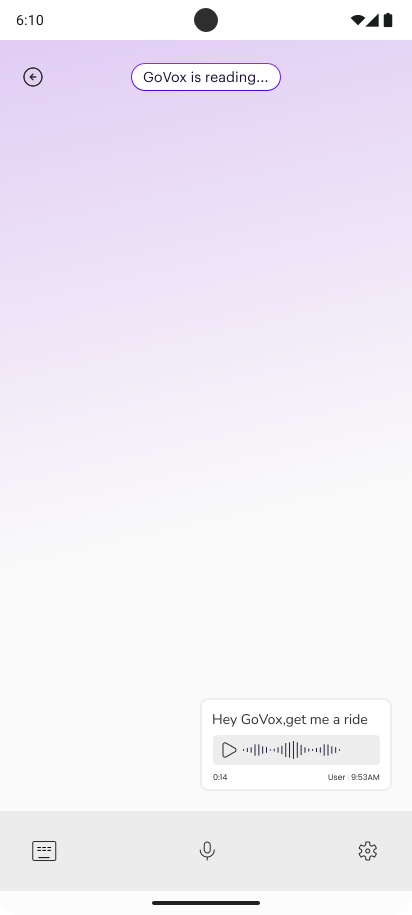
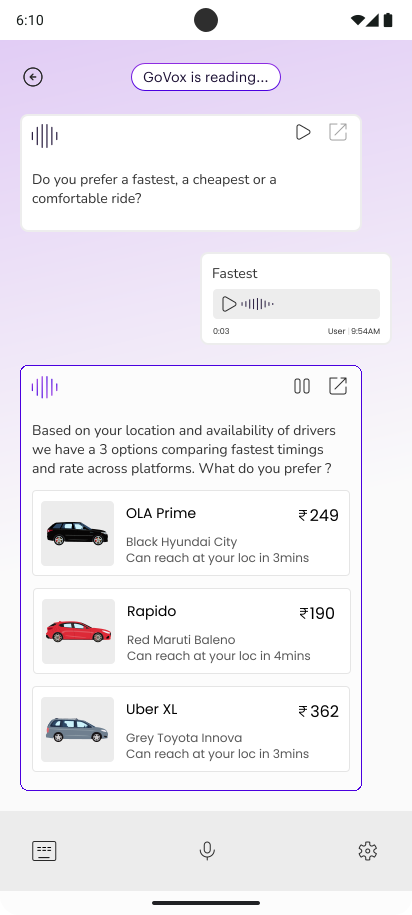
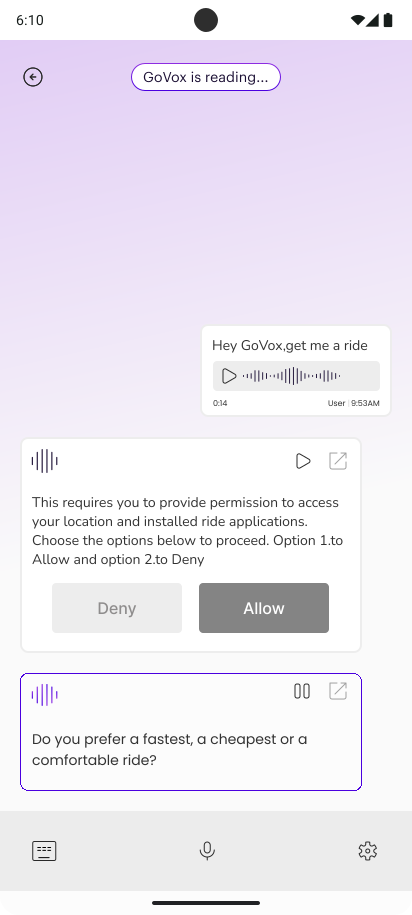
A figma prototype to translate insights into a realistic flow showcasing how a conversational UI could look while going hands free to book a ride

Hey GoVox get me a ride
6:10

GoVox is listening...
Unique
Features
Based on user inteactions, the key innovative features are listed below will help our product stand apart from the ones existing in the market.
Multi app integration
The first of its kind. Connects with Uber, Ola, Rapido, and other ride-hailing apps, giving users more options.
Pre Ride Assistance for visually impaired users
Notify the driver about specific assistance needs. Audio + haptic cues enable visually impaired users to confirm driver.
OTP based two way verification
Notify the driver about specific assistance needs. And real-time haptic feedback when the ride is nearby.
Fare & ETA Comparison
Fetches real-time fares, estimated arrival times, and surge pricing across multiple apps, helping users choose the best option.
Hands-Free Booking
Fully voice-controlled, allowing users to book a cab without touching their phone. Ideal for driving, multitasking, or accessibility needs
Context-Aware Conversations & ability to pick up regional language
Understands natural language and allows corrections (e.g., "Change drop location to home").
Inclusive
UX Principles
A holistic, voice-first mobile experience that reimagines how users—especially those with visual impairments, limited mobility, or multitasking needs—can interact with ride-hailing services
Users need guidance to locate their cab and ensure a seamless start to the journey. Users need guidance to locate their cab and ensure a seamless start to the journey. Enable real-time haptic feedback when the ride is nearby. Provide pre-ride assistance & location awareness. Allow sharing of the user’s exact location with the driver. Offer the ability to notify the driver about specific assistance needs.
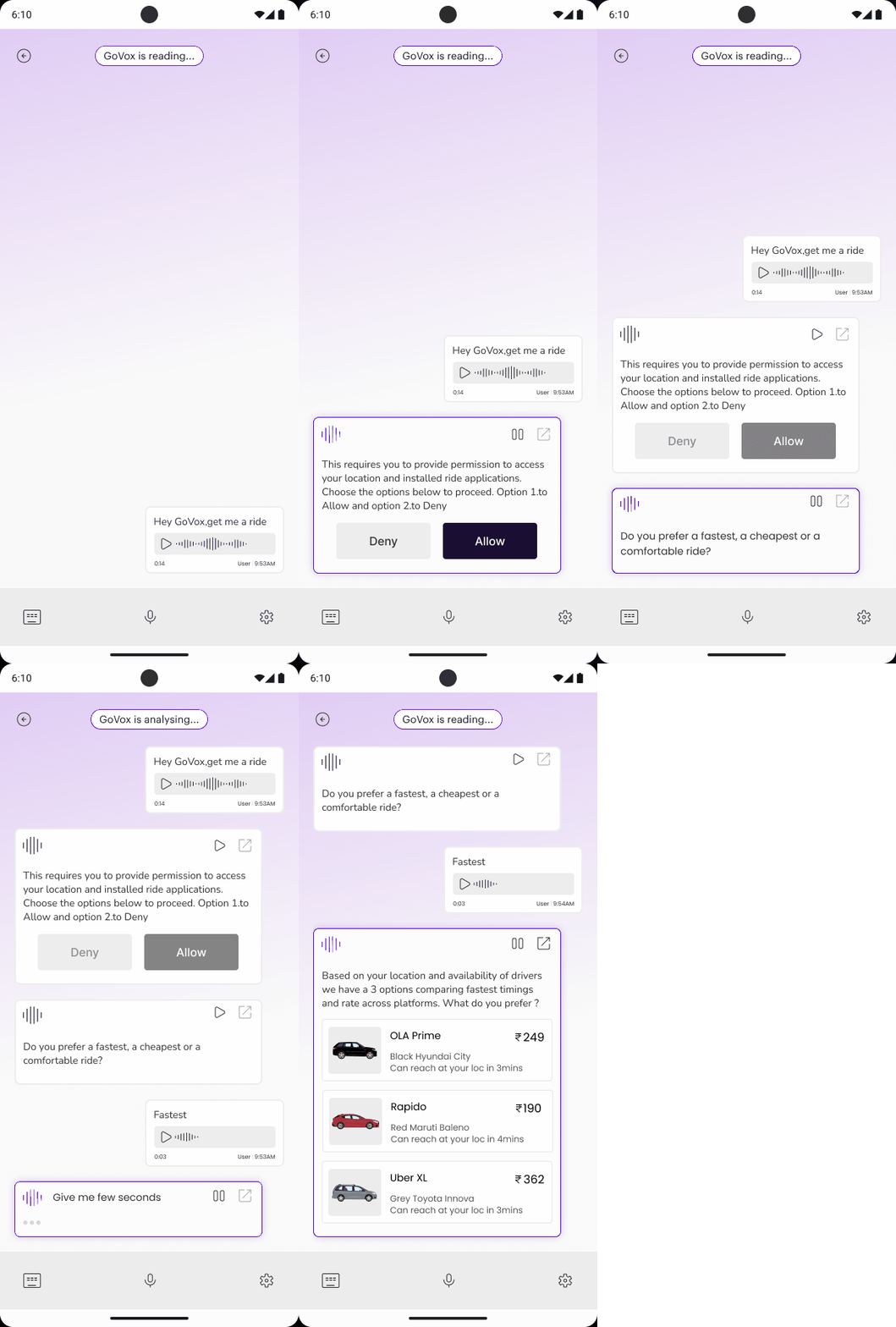
Outcome
A holistic, voice-first mobile experience that reimagines how users—especially those with visual impairments, limited mobility, or multitasking needs—can interact with ride-hailing services
This solution simplifies cab booking into a natural voice conversation, where the assistant intelligently collates available ride options across apps, prompts users with real-time options, confirms bookings, and even offers safety features like OTP-based ride verification—all done through intuitive voice interaction. The design is grounded in real user research insights, accessibility compliance (WCAG 2.1), and inclusive UX principles. Key accessibility enhancements—such as haptic feedback, voice-based driver identification, and automated messages to the driver—ensure the experience is not only hands-free, but also safe, secure, and empowering for users with diverse needs.